

Pareidolia (noun): the tendency to perceive a specific, often meaningful image in a random or ambiguous visual pattern; not be confused with paranoia ☺️
Pareidolia (noun): the tendency to perceive a specific, often meaningful image in a random or ambiguous visual pattern; not be confused with paranoia ☺️
Recently I've been turning books I've found useful into reusable skills.
It sounds a little strange when I put it that way. Take something I've learned from a book, tease out the ideas that seem useful, and turn them into instructions that an AI can apply to my own work.
Stanley Fish's How to Write a Sentence was one of the books I tried this out with.
I've been using it to look more closely at my own sentences, particularly the ones that don't quite work. What interests me isn't having the AI rewrite them. It's being able to see the choices inside a sentence more clearly.
Take this one from my fiction vignette, The Record Says Otherwise:
"The last thing Sorn's father had left him was a cart, two mules, and forty bolts of river-dyed cloth worth enough to clear the family's debts and have something left over."
I think Fish might actually have liked it as its syntax is doing narrative work rather than merely delivering information. Its movement is fairly simple. We start with the person who left the inheritance, then get the inventory, its value, and finally what that value can accomplish.
What interested me was discovering what else the sentence could have done, and what each alternative revealed about the original.
The Fish skill gave me four possibilities.
Tighter subordination
"The last thing Sorn's father had left him—a cart, two mules, and forty bolts of river-dyed cloth—was worth enough to clear the family's debts and have something left over."
The em-dashes turn the inventory into a parenthetical interruption. The sentence's main assertion becomes clearer: what Sorn inherited was worth enough to clear the debts.
The turn emphasized
"Sorn's father had left him only a cart, two mules, and forty bolts of river-dyed cloth. It was enough to clear the family's debts and have something left over."
Breaking the sentence in two changes the rhythm. The first sentence establishes an apparently modest inheritance. The second delivers the turn. It's a standard practice, and one I've honed over the years as a technical writer.
Additive style
"A cart remained, and two mules, and forty bolts of river-dyed cloth—the last things Sorn's father had left him, and enough to clear the family's debts, and even have something left over."
Here the repeated and changes the movement of the sentence. Instead of arranging everything into a hierarchy, it accumulates. The sentence feels less controlled and more like someone taking stock of what remains.
Enactment
"What had Sorn's father left him? A cart. Two mules. Forty bolts of river-dyed cloth—worth enough to clear the family's debts and have something left over."
Now the sentence performs the act of counting and assessing. The question creates a small expectation, and the fragments answer it one item at a time.
None of these is the correct version.
That's the part of Fish's approach that I keep coming back to. A sentence isn't simply a container for information. Its structure changes what the information feels like. Put the same facts into a different shape and they can arrive differently: one arrangement can make them accumulate, another can make them turn or pause.
And this is where turning the book into an AI skill has become interesting for me.
The useful thing isn't that the skill can produce four alternatives. An AI can produce alternatives all day long.
What matters is having to look at them.
I can now see things I might previously have felt without being able to name. A subordinate clause doesn't just sit there doing grammar. It puts one piece of the sentence in service of another. A turn sometimes needs the space of a new sentence. Accumulation has a different feel from hierarchy. And sometimes the structure isn't merely describing an action. It's performing it.
That recognition is slowly becoming intuition.
The skill may look as though it's teaching the AI how to write like Fish. What it's really doing is making me practice seeing like Fish.
And that, I think, is the more interesting use of AI for writing.
I don't particularly need the machine to write better sentences for me. What I need is enough different ways of looking at my own sentences that my judgment gets sharper. The alternatives are useful because they give me something to push against.
If the skill is doing its job, I'll eventually need it less.
I don't want an AI that writes like me. I want one that makes me more conscious of what makes my writing mine.
I was looking at some newly released books when one caught my eye: True Color: The Strange and Spectacular Quest to Define Color by Kory Stamper.
I started reading an excerpt from the book and came across a colour I'd never encountered before: sea pink. 😲 And, yes, it turns out that Sea Pink is a colour in the Pantone catalogue.
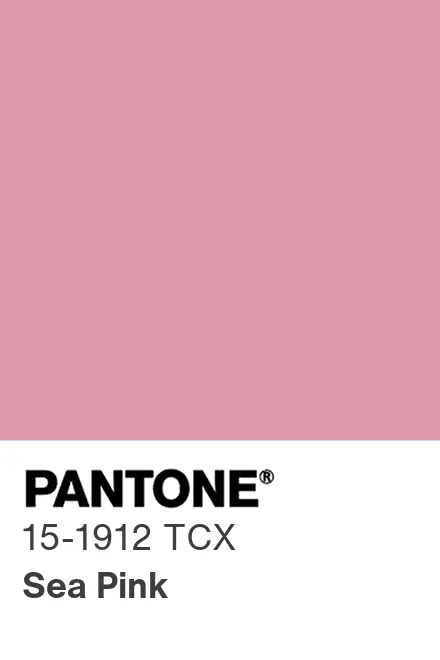
Naturally, I wanted to know where the name came from.
Somewhere along the way I came across a reference to ancient ocean pigments being pink. That caught my attention because it immediately brought Homer's wine-dark seas to mind.
For a moment, I wondered if I'd stumbled upon an explanation for Homer's strange description of the sea.
From there my mind jumped to Emily Wilson's Crossing the Wine-Dark Sea, which is currently sitting on my TBR list. And then, because apparently my brain wasn't done making connections, I noticed from the dedication that Emily's sister is Bee Wilson, another wonderful writer whose work about food I enjoyed a lot.
Then some fact-checking interrupted my excitement.
The ancient pigments, it turns out, weren't actually pink when they were part of living organisms. Chlorophyll contains magnesium, which gives it its green colour. But in the billion-year-old sediments that scientists studied, nickel had replaced the magnesium in the chlorophyll-derived molecules, turning them pink.
There was a word for this process that I'd never encountered before: diagenesis.
Diagenesis describes the physical and chemical changes that sediments undergo after they are deposited and buried. In this case, it helped explain how chlorophyll-derived molecules in billion-year-old sediments ended up pink.
I liked the word almost as much as the colour.
But I still hadn't answered my original question.
Where did sea pink come from?
A little botany.
Sea pink is the common name for a plant, Armeria maritima, that grows near the sea and has pink flowers. At some point, the name of the flower became the name of the colour.

And there I was, having started with a book about colour and somehow travelled through Homer, Emily Wilson, Bee Wilson, chlorophyll, billion-year-old sediments, diagenesis and a flower growing by the sea.
I suppose that's what happens when you follow a colour.

[I'm reading *Moby-Dick* at the moment](https://www.linkedin.com/posts/xavierroy_srividya-suryanarayanan-asked-if-we-can-do-share-7490785589437349888-Pdwq/), and I've been thinking about first lines. That's probably inevitable when you're reading a book that begins with ***Call me Ishmael***.
It is such a strange thing to do with the beginning of a novel. Melville doesn't explain where we are or why Ishmael is speaking to us. He doesn't even tell us much about Ishmael. He simply gives us a name and a voice, and somehow that is enough to make us keep reading.
Meanwhile, I've been trying to write a story of my own and have been stuck on its first line for a while. I wrote:
> I was on my regular maintenance walk along the northern wall when I first noticed the crack. I thought to myself, *Well, it wasn't there yesterday*.
I've been staring at that sentence long enough to feel a discomfort knowing that something about it wasn't quite right without being able to say exactly what. Then I went back to my notes from Stanley Fish's [*How to Write a Sentence and How to Read One*](https://link.amazon/B0dLqhUXV), and I started to see the problem in my sentence.
For one thing, I'd buried the important bit. The main clause is *I was on my regular maintenance walk*. Grammatically, that tells the reader that the walk is the important thing; it wasn't. The *crack*, which is actually the reason I'm telling the story, gets pushed into a subordinate clause.
Fish has an interesting way of making you look at sentences structurally. The grammar isn't just a set of rules for putting words together. The structure itself tells us what to pay attention to. The main clause gets the prime position; everything else has to negotiate for attention. I'd given that position to the walk. I had got the hierarchy backwards in my sentence.
Then there was the narrator getting in the way. *I first noticed the crack. I thought to myself.* Both phrases are telling the reader that something is happening inside my head rather than simply letting the thing happen. Fish calls these constructs as "pointing words": *I noticed, I saw, I felt.* They're not necessarily bad, but they can be unnecessary. If the crack is interesting, perhaps I don't need to announce that I noticed it.
So I tried taking the narrative scaffolding out of the sentence altogether and ended up with:
> *The crack wasn't there yesterday.*
Now this felt much better, not the level of 'Call me Ishmael'.
It also made me notice something I hadn't thought about before. I'd originally written *yesterday*, which seemed perfectly natural. But *yesterday* is entirely dependent on the narrator. We know what yesterday means because the person telling us the story knows when they are speaking. So one more change:
> *The crack wasn't there on Thursday.*
Replacing it with *Thursday* suggests that there is a routine behind the sentence. Someone walks along this wall often enough to remember what was there on a particular day. There is a schedule, a history, a world that existed before the crack appeared.
One word suddenly seemed to be doing the work of an entire paragraph. Fish wrote about the "sentence as world." A good sentence doesn't merely describe a world. For a moment, it creates one. Sometimes a sentence can give you enough of a world that you don't need the narrator to explain it.
Perhaps that's part of what makes *Call me Ishmael* so effective too. It doesn't tell us much, but it gives us someone to listen to. Three words and there is already a relationship between the person speaking and the person reading. The rest of the world arrives later in the story.
I've spent rather too much time worrying about whether the first line is doing everything it possibly can. Now I need to stop fussing over it and write the second line and the third, and someday the final line.
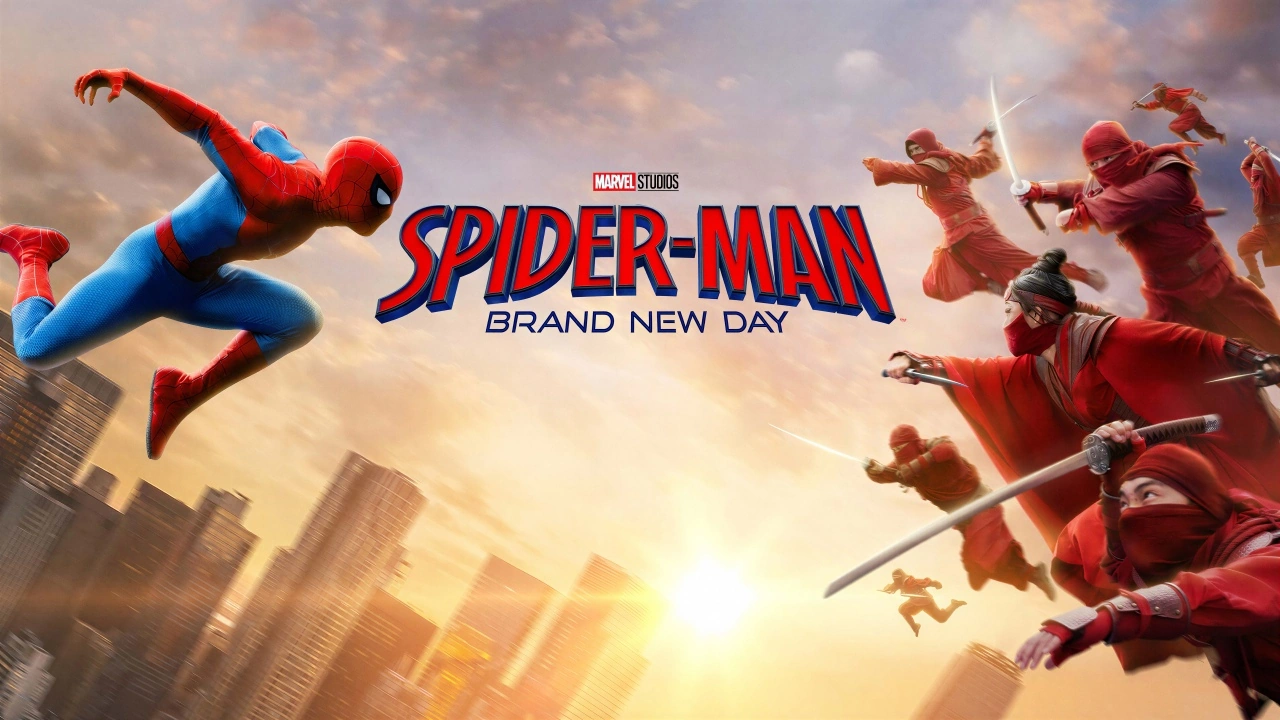
A forgotten Peter Parker lives alone as a full-time Spider-Man until mounting pressure triggers a dangerous change and a powerful new enemy emerges.
I missed the pre- and post-interval scenes while grabbing snacks—Max was smart enough to stay behind and catch what I skipped. Now I need to rewatch those parts!
Marina Mall Inox should seriously consider opening more refreshment counters or speeding up their service. The concession queue was so slow that I missed key moments of the film.
{.aligncenter}
In 1957, Indiana Jones is called back into action when he becomes entangled in a Soviet plot to uncover the secret behind mysterious artifacts known as the Crystal Skulls.

Watched this with Max as he wanted to catch another movie. Last year we had seen [Indiana Jones and the Temple of Doom](https://xavierroy.com/indiana-jones-and-the-temple-of-doom/) exactly a year back.
Hollywood has spent nearly 600 million dollars trying to bring Matt Damon back home 😎
First they saved him in Saving Private Ryan. Then they left him floating in space in Interstellar. Then they abandoned him on Mars in The Martian. And now The Odyssey is sending an entire Greek epic after him for another $250M.
At this point Matt Damon isn’t an actor anymore. He’s a very expensive missing person case 😅
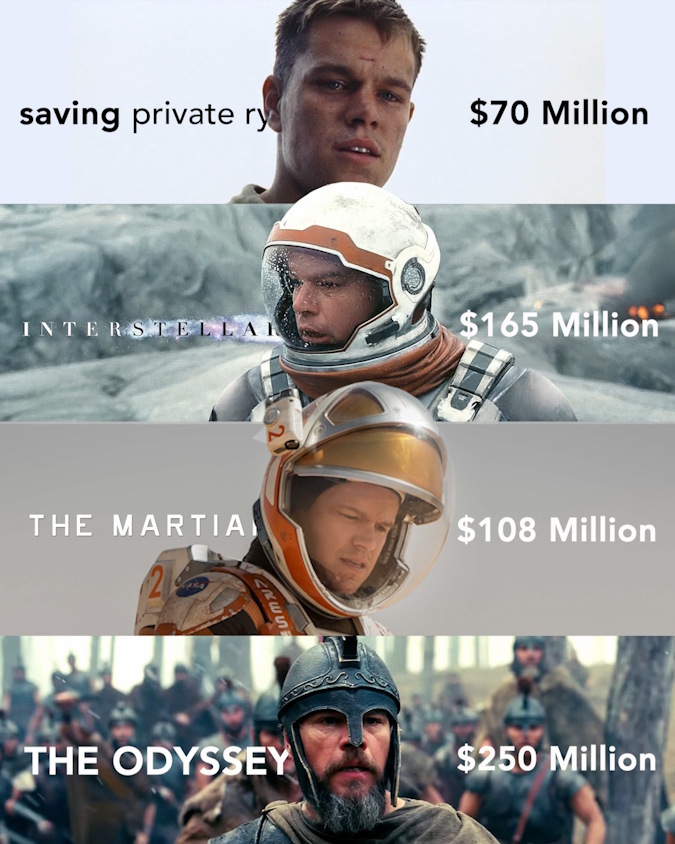
Sure it seems a legit expense...
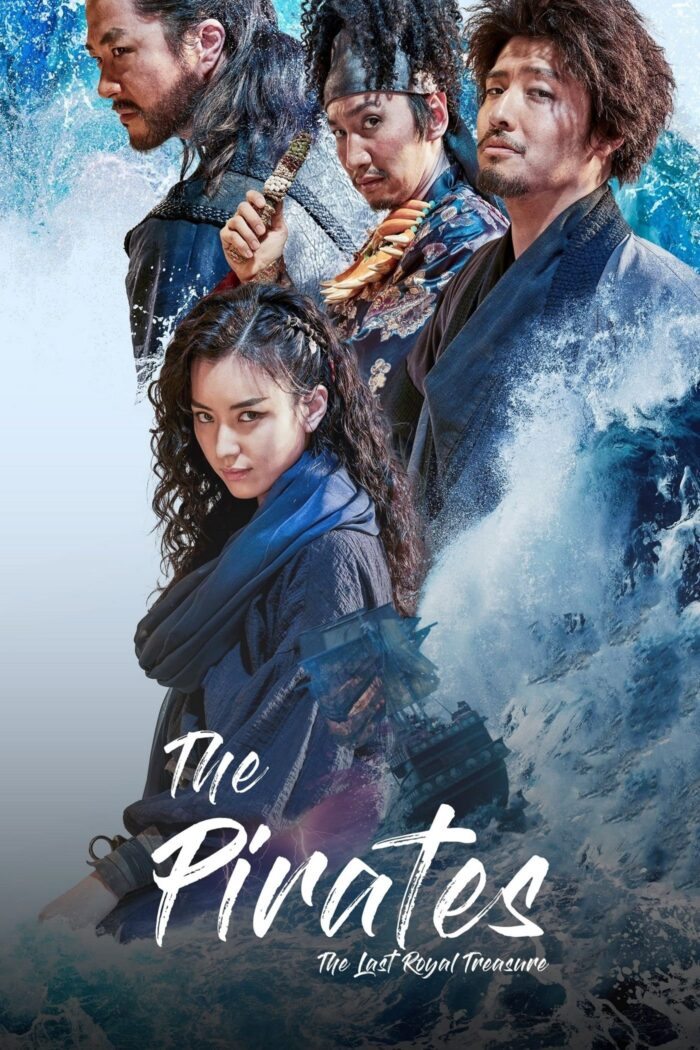
Max wanted to catch a movie before bedtime. We couldn't find Shaolin Soccer available again. The ones on YouTube were basically clickbait. Netflix had a couple of other Stephen Chow movies. I gave Max some options: A Chinese Odyssey 🇨🇳 featuring Stephen Chow, Space Sweepers 🇰🇷, and The Pirates: The Last Royal Treasure 🇰🇷.
He initially chose A Chinese Odyssey since he was slightly familiar with the Monkey King myth. But after a minute, he felt Pirates would be a better choice and a much newer movie. I guess that age of the movie (released in 1995) was a factor. 🤷🏾♂️
I had watched The Pirates: The Last Royal Treasure back in 2022. This time around, we had fun watching the antics of the pirates. Max liked it and I feel he is now starting to learn watching movies without the need for a theatre experience and without popcorn 🍿.
Next time around, I need to convince him to watch some Jackie Chan movies. I'm looking forward to seeing what he discovers next.